




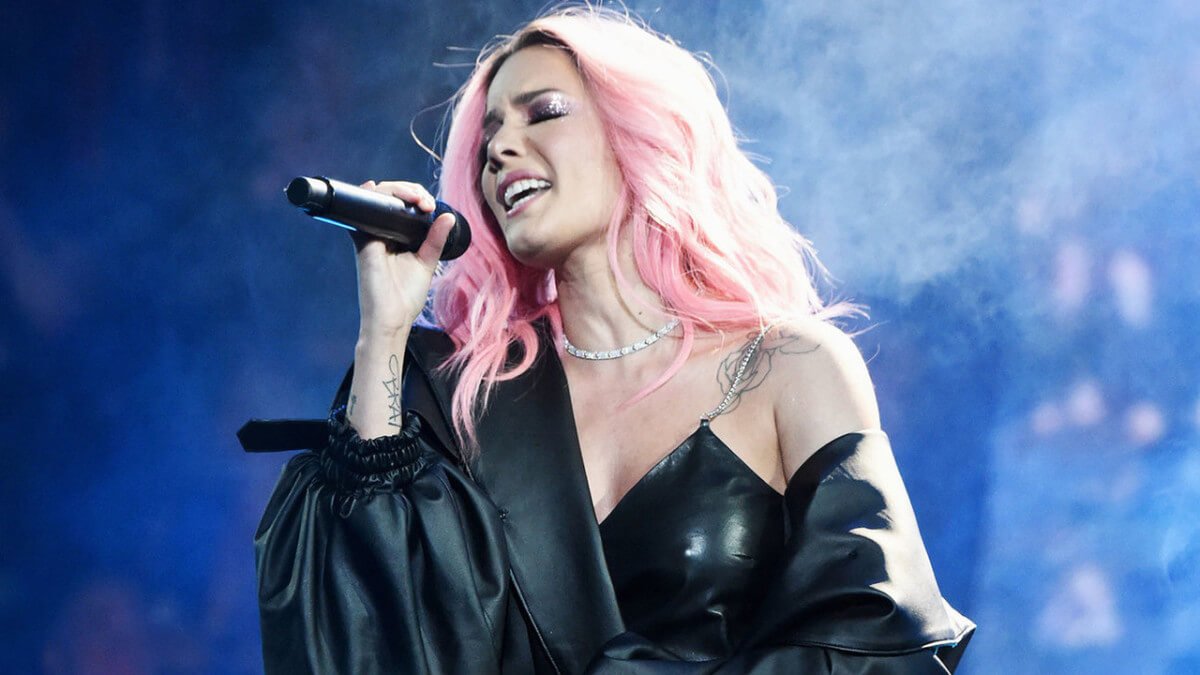
Few artists in modern pop music have managed to balance vulnerability, rebellion, and artistic reinvention quite like Halsey. Known for her raw lyrics, genre-blending sound, and unapologetic authenticity, Halsey has carved out a space that feels entirely her own—and in doing so, she’s become a defining voice for a generation navigating identity, mental health, and self-expression.
From Tumblr Poetry to Global Stardom
Before she was topping charts, Halsey—born Ashley Nicolette Frangipane—was sharing poetry and thoughts online. Her early work gained traction on platforms like Tumblr, where her unfiltered honesty resonated deeply with young audiences. That emotional transparency would later become the backbone of her music.
Her breakout moment came with the release of her debut album Badlands in 2015. The project introduced listeners to a dystopian, alternative-pop world filled with themes of isolation, rebellion, and longing. Songs like “New Americana” quickly became anthems, signaling that Halsey wasn’t just another pop artist—she was a storyteller with something urgent to say.
Reinvention as an Art Form
What makes Halsey particularly compelling is her refusal to stay in one lane. Each album feels like a new chapter, both sonically and visually.
Her sophomore album Hopeless Fountain Kingdom leaned into a more mainstream pop sound while still exploring complex emotional landscapes. Then came Manic, arguably her most personal project, where she dismantled any remaining walls between her public persona and private struggles. The album touched on heartbreak, identity, and mental health with striking honesty.
In 2021, Halsey took an even bolder step with If I Can’t Have Love, I Want Power, a dark, cinematic exploration of femininity, power, and motherhood. Produced by Trent Reznor and Atticus Ross, the album marked a dramatic shift in sound, blending industrial rock with haunting orchestration. It was a reminder that Halsey isn’t afraid to take risks—even if it means alienating parts of the mainstream audience.
A Voice for Mental Health and Identity
Beyond music, Halsey has been an outspoken advocate for mental health awareness and LGBTQ+ rights. As someone who has publicly discussed living with bipolar disorder, she uses her platform to normalize conversations that are often stigmatized.
Her openness has created a powerful connection with fans who see themselves reflected in her experiences. Whether it’s through lyrics, interviews, or social media, Halsey consistently emphasizes that it’s okay to be complex, messy, and still worthy of love.
Visual Storytelling and Aesthetic Control
Halsey isn’t just a musician—she’s a visual artist. From album covers to music videos and live performances, she maintains a strong creative vision. Her aesthetics often shift with each era, but they always feel intentional and immersive.
The film accompanying If I Can’t Have Love, I Want Power is a perfect example. Rather than simply releasing an album, she built an entire narrative world around it, blending music with cinematic storytelling in a way that elevated the project into something closer to performance art.
Why Halsey Still Matters
In an industry that often rewards predictability, Halsey thrives on unpredictability. She challenges norms, experiments with sound, and refuses to dilute her message for mass appeal. That authenticity is precisely why she continues to resonate.
Her work reminds us that art doesn’t have to fit neatly into categories—and neither do people.
Final Thoughts
Halsey’s journey is far from conventional, and that’s exactly the point. She represents a new kind of artist: one who embraces contradictions, evolves constantly, and invites listeners to do the same.
Whether you’re drawn to her music for its emotional depth, its sonic experimentation, or its fearless honesty, one thing is clear—Halsey isn’t just making songs. She’s building a legacy rooted in truth, transformation, and unapologetic self-expression.
FAQs About Halsey
1. What is Halsey’s real name?
Halsey’s real name is Ashley Nicolette Frangipane.
2. How did Halsey become famous?
She gained attention by posting music and poetry online, particularly on Tumblr. Her song “Ghost” went viral, leading to a record deal and the release of her debut album Badlands.
3. What genre of music does Halsey make?
Halsey’s music spans multiple genres, including pop, alternative pop, electropop, and even rock. She’s known for experimenting with different sounds in each album.
Also Read: KCA University Student Portal: A Complete Guide for Students
4. What are Halsey’s most popular songs?
Some of her biggest hits include “Without Me,” “Closer” (with The Chainsmokers), “Bad at Love,” and “Graveyard.”
5. Has Halsey won any awards?
Yes, she has won several awards, including Billboard Music Awards, American Music Awards, and iHeartRadio Music Awards.
6. Does Halsey write her own songs?
Yes, Halsey is heavily involved in songwriting and is known for her deeply personal and emotional lyrics.
7. What is Halsey known for besides music?
She is also known for advocating mental health awareness, LGBTQ+ rights, and social issues. She’s also involved in visual art and creative direction for her projects.
8. Does Halsey have any health conditions?
Halsey has openly discussed living with bipolar disorder and uses her platform to raise awareness about mental health.
9. Has Halsey acted in movies or shows?
While primarily a musician, she has explored acting and appeared in film projects related to her music, including the visual film for If I Can’t Have Love, I Want Power.
10. What makes Halsey unique as an artist?
Her willingness to be vulnerable, experiment with different musical styles, and maintain creative control over her work sets her apart from many mainstream artists.